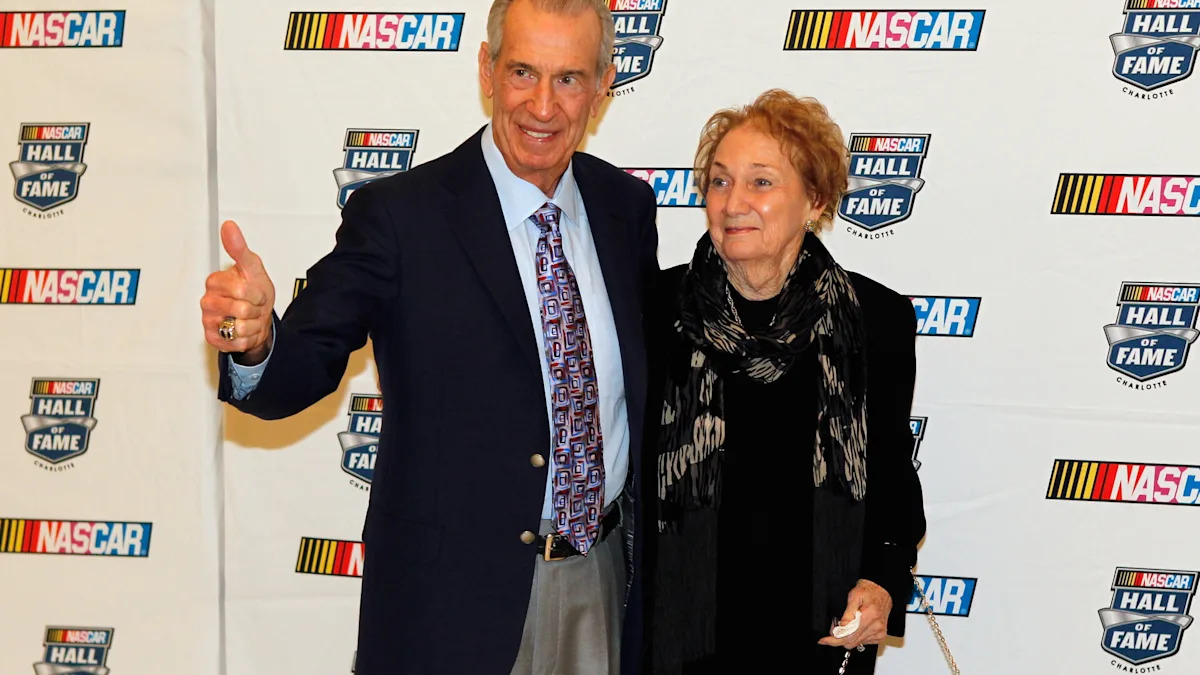
Today’s news that NASCAR Hall of Famer Ned Jarrett had died at age 93 felt like losing a longtime close friend, albeit one you never met in person, but was in your living room most Sundays for decades.
If you grew up a fan of NASCAR in the 80s and 90s, the era that really helped set the table for the sport’s peak in national prominence that would follow, you enjoyed great on track battles between the likes of all-timers Dale Earnhardt, Darrell Waltrip, Rusty Wallace, Bill Elliott and then Jeff Gordon to name a few. (And, Dale Jarrett, of course. Read on.)
Advertisement
Ned was in the TV booth for so many of the formative moments of that time, either on CBS with Ken Squier and company for the Daytona 500, or, much more frequently with Bob Jenkins and Benny Parsons on ESPN, a trio that to this day is still revered, despite being 26 years since they last called a race together. A decade ago, when Ned and Dale Jarrett joined Ken Squier for NBC’s throwback Southern 500 telecasts, it was remarkable that Ned hadn’t missed a beat. (Imagine if Ned could have joined Leigh Diffey for a race!)
Ned’s cool, calculating style helped him to two championships as a racer. That same style, plus his ability to clearly communicate complex things helped translate his sport to fans who were discovering it for the first time through TV.
Thinking back on it today, what stands out is his versatility. He was an analyst with the broadcasting range that many career announcers don’t even have.
Ned’s most famous moment in the booth came spontaneously, when he called his son, Dale, home to victory in the “Dale and Dale Show” against Earnhardt on the last lap of the 1993 Daytona 500.
Ned called Dale to victory in the Great American Race again three years later. Both of those calls are remembered, yes, for their joy, but also, because they were good. He blended the emotion with description that would give many pure race-callers a run for their money.
Advertisement
Aside from those indelible moments, Ned so consistently blended the two main jobs of an analyst – educate and entertain.
There were numerous times when a telecast would include a feature that started with Ned driving a convertible down the highway in Daytona at the posted speed limit and then transition into him driving at either 55 or 65 miles per hour on Daytona International Speedway, only to be passed by a race car traveling at 200 mph. Ned first did this in the 1980s and with all the technology of 2026, you’d still have a hard time demonstrating how fast those cars race on those high banks more effectively than that.
When NASCAR debuted new, complicated pit road procedures at the 1991 Daytona 500, CBS turned to Ned to explain it. When the restrictor plate needed to be explained, Ned did it. He had the knowledge to rival the most cunning of crew chiefs, and the uncommon ability to translate that to plain speak.
Advertisement
“Gentleman Ned” wasn’t often the first name people thought of in either of his two main TV booths — Ken Squier and Bob Jenkins were elite lead announcers who elevated big moments and made the rest of the races they were calling more exciting than they might have actually been, and Benny Parsons’ larger-than-life personality spoke for itself.
But NASCAR on TV during that formative era would not have been nearly what it was without Ned’s steady demeanor. He was, in many respects, the conscience of NASCAR and the heart and soul of all those memorable moments that came into our living rooms every Sunday.
Heaven has one heck of a broadcast booth.

