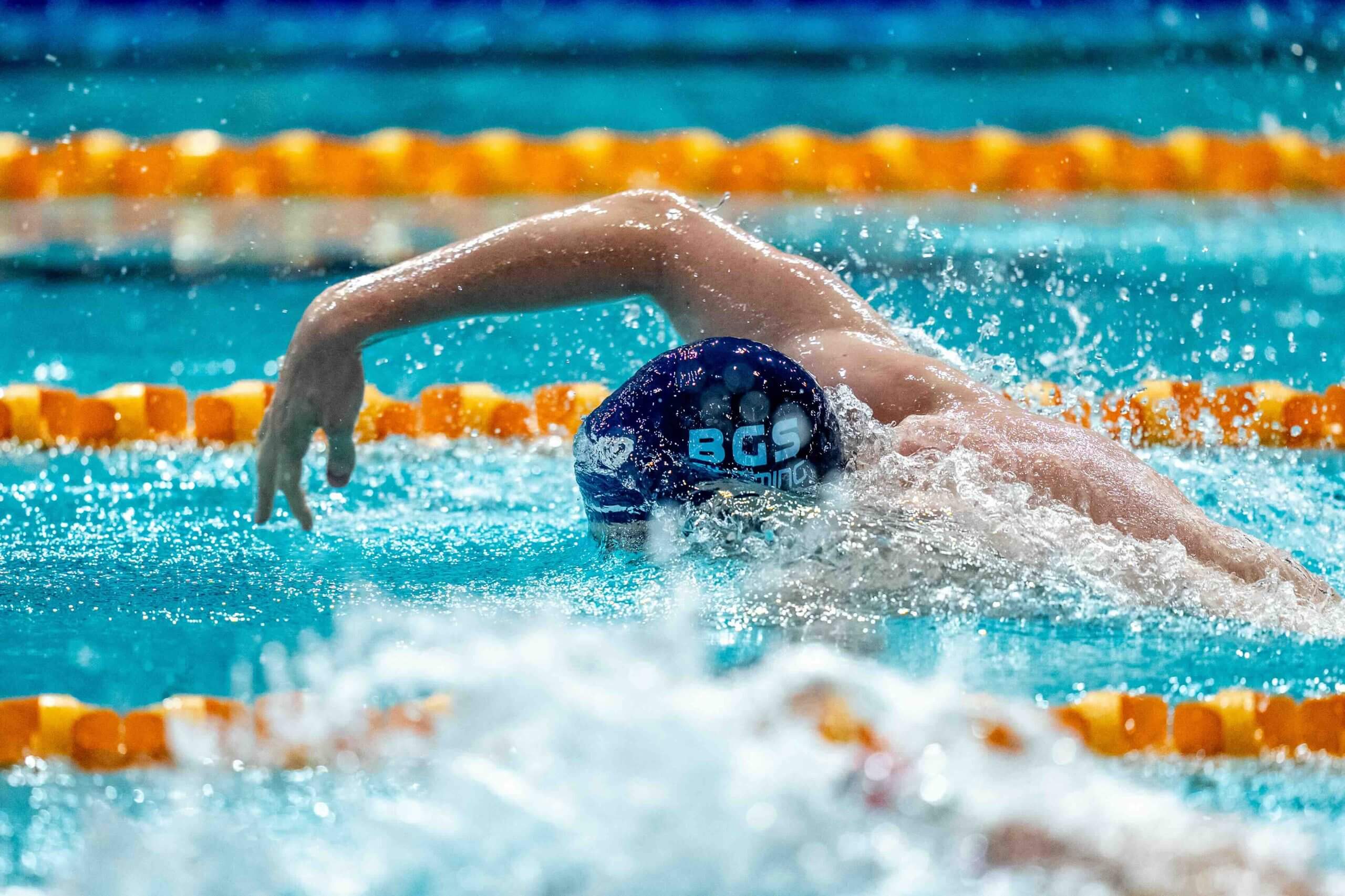
Plan vs. Strategy: The Ways to Approach the 200 Freestyle
Swimming is not unique in the respect of a sport demanding a clear mind during competition. Overthinking during competition can be the death knell for success. Sports, as constructed, demand on-your-feet (or feet-on-wall) thinking. Overthink too long, and the race is over.
The dichotomy of sport is that practice demands constant preparation. It’s necessary in order to have these competitive moments feel second nature. Perhaps no sport perfectly exemplifies this contradiction more than swimming. Especially when it comes to sprinting, the best advice that you can get before a race is to “not think” and “just do.” Helpful advice for a race? Absolutely. But only helpful if planning and thinking for the race have been drilled in over countless reps and practice hours.
The strange middle has to do with the longer races that require more preparation and strategy. Over the next few weeks, I’ll be examining some of these key races one by one with different strategies to race. For the first entry, it’s best to write about what you know. And what I know too well, the bane of my existence, is the 200 freestyle.
Much 2(00) do About Swimming
The 200 freestyle is unique in that it is both a distance event and it is a sprint depending on one’s age and stamina. Four 50s, seven turns (in short course) and a whole lot of pain until reaching the beautiful ending. Despite being considered on the sprint end in the college and above levels, the 200 requires a great deal of strategy. Very few have lived to tell about a 200 that started fast and hoped to stay there.
The 200 is fascinating from a strategy standpoint because two main camps of freestylers meet at the same level. Distance swimmers going down feel like they can carry a more stable kick rate and treat each 50 like a lactic set with turns. Some distance swimmers like to think of the 200 as a shortened 500, taking the best two 100s from that 500 and making them connect like puzzle pieces. Others see it as a classic training set, hitting their marks without ever stopping for air.
Sprinters ranging up will typically approach each 50 as its own individual chunk, which will determine when to let the engines flair. This reflects well with a plethora of broken swims that come with practice. Used to gripping and ripping, the sprinters confront a harsh reality: choosing which 50s are getting the legs. Comets will burn out quickly.
Air Supply – Even the Walls Are Better
What is universal about any 200 strategy is breathing. Air is available at many points in a 200, thankfully. But it also carries the risk of falling too far behind with breathing. Attempting to one or no breath a 25 during a 200 is valiant, but typically results in crashed legs. More often, breathing patterns in a 200 are constant throughout, with the difference being wall length in how breathing is attacked.
All in all, the 200 strips bare what each freestyler is great at and what their weaknesses are. It also is such a revealing and demanding event. The variety of strategies is so wide that non-freestylers can typically find themselves on an 800 free relay and achieve great success.

